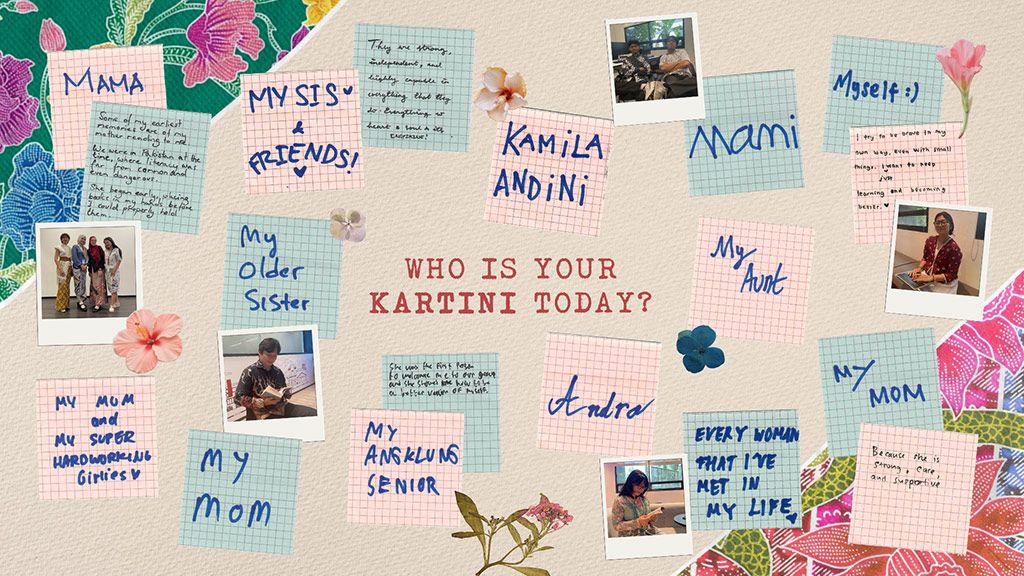
A student-led reflection session (see photo below), where members of our academic community share who they see as their Kartini today—the women who have supported, guided, challenged, and inspired them in deeply personal and powerful ways.
With Kartini Day just behind us, it feels timely to return to a simple but enduring idea at the heart of Raden Ajeng Kartini’s legacy: that the progress of a nation begins in the relationships that shape how individuals first learn to think, speak, and understand the world. Universities do not begin this work so much as they continue it, building on early foundations to develop habits of critical thinking, independence, and curiosity.
At Deakin University Lancaster University Indonesia, this connection is clear. The institution brings together local context and international perspectives, focusing not only on knowledge, but on helping students grow into thoughtful, capable individuals—reflecting Kartini’s belief that education, especially for women, is essential to meaningful progress.
Kartini placed particular importance on the role of the mother as the “first educator,” recognising that a child’s earliest lessons are often shaped in close proximity to her, with lasting influence. She also described women as “carriers of civilization,” highlighting how values and ways of thinking are passed on through everyday acts of care and guidance. For Kartini, this had wider consequences: a society that does not invest in the education of women risks limiting its own future.
In Kartini’s view, being a woman is not only about having children, but about supporting, guiding, and nurturing others. We are surrounded by many women who take on this role—teachers, mentors, relatives, and colleagues.
In her eyes, being a woman is a source of strength and encouragement. She lived in a complex environment where women’s rights were largely absent, yet she did not waver in her beliefs. Her limitations became her strength. Education happens not only in classrooms, but also in encouragement offered at the right time, in guidance that helps someone move forward, and in the presence of someone who believes in you when it matters most.
Kartini’s legacy, then, is not only about advocating for women’s education. It is also about recognising the many ways people shape one another’s lives. As Kartini Day approaches, it offers a moment to reflect on those influences—both within families and beyond them.
As we reflect on Kartini Day, we celebrate not only her fight for women’s empowerment and equality, but also how far we ourselves have come—as mothers, wives, daughters, students, professionals, and members of our communities. We honour both the gentleness and the strength in that journey: the search for identity, and the continued commitment to genuine recognition. Kartini believed in the boundless potential of women, and her words continue to resonate far beyond her time. In celebrating her, we also celebrate one another—and the paths we continue to shape.